| ||
|
Mostrar mensagens com a etiqueta investigação. Mostrar todas as mensagens
Mostrar mensagens com a etiqueta investigação. Mostrar todas as mensagens
quarta-feira, 24 de maio de 2017
CONGRESSO DE ORGANOLOGIA 2017 ORGANOLOGICAL CONGRESS


sexta-feira, 6 de dezembro de 2013
CONGRESSO DE ORGANOLOGIA | ORGANOLOGICAL CONGRESS
Encontro Científico Internacional para Estudos sobre
Som e Instrumentos Musicais
CONGRESSO DE ORGANOLOGIA 2014
ORGANOLOGICAL CONGRESS 2014
International Scientific Meeting for
Sound and Musical Instrument Studies
19 & 20/07, Museu Nogueira da Silva, Braga, Portugal
CALL FOR PAPERS
Submissions are now open for the 2014 Organological Congress organized by ANIMUSIC-Portugal in collaboration with the Museum Nogueira da Silva and the University of Minho in Braga, Portugal.
The central objective of this conference is to bring together professionals, researchers, makers and players with an interest in the broad field of Organology. We therefore welcome proposals for papers, panels, and posters that relate to the science of musical instruments in areas such as musicology, social history, archaeology, museology, engineering, electronics, acoustics, decorative arts, iconography, psychology, or on issues related to the performance or use of musical instruments. As in the previous conferences, we particularly encourage performance practice, lecture-recitals and commented recitals, promoting the dialogue between science and art. This year’s main theme is Tradition and Modernity, following the crossroads so typical in Organology. We look forward to abstracts which describe original and technically excellent research with critical standpoints. The title, abstract (in English, of up to 300 words), and a biographical note (in English, up to 100 words) should be received by email on or before the 31st of March of 2014. The results will be communicated individually after being peer-reviewed by the scientific committee, not later than the 15th of April. The official language is English due to the large number of international participants. Papers presented at the Organological Congress may be submitted for publication in the conference proceedings.
Please send submissions to congressorg.animusic@gmail.com
For further and updated information please check the website
or contact us at

quinta-feira, 7 de fevereiro de 2013
CONGRESSO DE ORGANOLOGIA 2013 ORGANOLOGICAL CONGRESS
 Encontro Científico Internacional para Estudos sobre
Som e Instrumentos Musicais
Encontro Científico Internacional para Estudos sobre
Som e Instrumentos Musicais
CONGRESSO DE ORGANOLOGIA 2013
International
Scientific Meeting for Sound and Musical Instrument Studies
ORGANOLOGICAL
CONGRESS 2013
18-20
/ 04 / 2013
Local:
Universidade de Évora - University of Evora, Portugal
CALL FOR PAPERS
Geral-General
In furtherance of our principal aim of promoting the
interchange of knowledge and experience in the field of musical instruments,
the Organological Congress 2013 in Portugal will bring together scholars and
all who are interested in the various subjects embraced by Organology, such as
museology, engineering, acoustics, archaeology, history, applied arts,
psychology, or in issues related to the performance or use of musical
instruments (neuroscience, ergonomics, morphological anthropology,
kinanthropometry or others). We are looking forward to the revealing of “new
ideas”, new studies on instruments, new research methods, inventions and
further developments of acquired scientific knowledge. While the main theme in
2013 will focus on innovation in sound studies and production and a strand of
the congress will embrace this theme (see below), papers are welcomed from any
branch of organology, in order to maintain our aim of representing this
scientific area as an holistic whole. Resumos-Abstracts
We are inviting potential participants to submit abstracts (200-300 words) in English (international common language), for lecture proposals (15+5 minutes for questions and handover), lecture-recital or recital proposals (30 minutes) or posters, in all topics related to Organology, including acoustic analysis, construction or study of the mechanics of instruments, museological concerns (collections, exhibition, conservation, media, public policies, etc.), iconography or performance issues. Papers are cross-related with the opportunity being provided for open sessions. We appreciate proposals which are original, technically excellent, and with a synthetic and critical posture. Presentations should be in English, wherever possible, but may also be in Portuguese, French or Spanish, provided that the presentational material (PowerPoint) is in English.
The title, abstract and a short biography (100 words) should
be received by email (to: congressorg.animusic@gmail.com) on or before the 20th of March of 2013,
independently of time zone. The results will be communicated individually after
being peer-reviewed by the scientific committee, not later than the 31st
of March. Papers presented at the Organological Congress may be submitted for
publication in the conference proceedings. Early registration is available
during February and March. Participants are offered special discounts for flights
by TAP.
Special guest speakers: Dr.
Peter Holmes, Prof. Eberhard Meinel, Prof. Jeremy Montagu, Prof. Arnold Myers
For further and updated
information please check the website: www.animusic-portugal.org or
contact us at: animusic.portugal@gmail.com
TEMA-THEME
Leading to new ideas : innovation from past, present and future
By identifying crossroads of diversified knowledge, this
meeting will facilitate the interchange of ideas, bringing people together from
various fields and expanding awareness of what exists and what might exist.
Beyond the reinvention of the past, using a limitless imagination regarding the
building of instruments with traditional materials, the bridge to new
technology has been crossed to access a new world of sound exploration.
Wonderful possibilities have been opened up with the advances in technology, both
in the study of the lost past or the surviving objects of the present, as well
as in the development of innovative instruments, paving the way to a future
whose potential remains unimaginable even for the workers on the cusp of these
developments, let alone the general public. Different perspectives will be
presented at this conference, for the observation of the intersection of sound
with everyday life, the physical and psychological effects of listening and
playing, the interconnectivity or the regional particularities observed in the
various collections around the world, or for cultural originality of any kind. Researchers, constructors, inventors,
curators, traders, artists, and all interested in this unlimited journey will gather
to debate the inventive spectrum of ‘sound’ production and musical composition
and also to investigate what has lead the human to value organised sound so
greatly and what drives us on to expand the world of sound continuously,
ensuring that the one predictable thing about the future of human sound tools will
be their unpredictability. Sound and creation, from time immemorial into the
future. Leading to new ideas : innovation from past, present and future
EXTRA PROGRAM
» CONFERÊNCIA-CONFERENCE “Art and Science” at the Goethe Institut in Lisbon, 17th of April, 19h00, Biblioteca, free entrance: Lecture in the form of a dialogue, where the relationship between the development of the organological science and the arts is illustrated by Dr. Patricia Bastos, President of ANIMUSIC, and also where examples of schools of musical instrument construction and research carried out in Germany are shown by Prof. Eberhard Meinel, Director of the Studiengang Musikinstrumentenbau from the University of Applied Sciences in Zwickau, Germany.
» CONFERÊNCIA-CONFERENCE “Art and Science” at the Goethe Institut in Lisbon, 17th of April, 19h00, Biblioteca, free entrance: Lecture in the form of a dialogue, where the relationship between the development of the organological science and the arts is illustrated by Dr. Patricia Bastos, President of ANIMUSIC, and also where examples of schools of musical instrument construction and research carried out in Germany are shown by Prof. Eberhard Meinel, Director of the Studiengang Musikinstrumentenbau from the University of Applied Sciences in Zwickau, Germany.
»
EXPOSIÇÃO-EXHIBITION OF MUSICAL INSTRUMENTS (during the
Congress): Palácio do Vimioso, Universidade de Évora, Portugal
» CONCURSO ANIMUSIC /
CONTEST FOR THE CONSTRUCTION OF MUSICAL INSTRUMENTS: to be announced at www.animusic-portugal.org
sexta-feira, 7 de outubro de 2011
SIMPÓSIO INTERDISCIPLINAR 2011

CULTURA FRANCESA, INOVAÇAO E PIONEIRISMO
INTRODUÇÃO
A Associação Nacional de Instrumentos Musicais (ANIMUSIC), em conjunto com a Unidade de Investigação em Música e Musicologia da Universidade de Évora e com o apoio da Juventude Musical Portuguesa - Delegação do Porto, organiza o segundo Simpósio Interdisciplinar sob o tema: "Le miroir d’un Moment”: Cultura Francesa, Inovação e Pioneirismo". Subjacente a esta iniciativa está a vontade de proporcionar, num espaço e tempo, um encontro de especialistas em áreas diversificadas que, sobre uma temática, partilhem entre si conhecimento e experiências. Para além de se promoverem participações nacionais e estrangeiras, em número que não prejudique o desejado interrelacionamento, incluímos na programação momentos de música, poesia e teatro. Oferece-se um período limitado para comunicações livres (propostas (20 minutos) a serem enviadas até ao dia 15 de Novembro).
Convidamos a um olhar sobre o Simpósio do ano transacto em: http://animusic-portugal.blogspot.com/2010_10_01_archive.html. Em 2011 será realizado no dia 3 de Dezembro na sede da JMP-Porto (Rua da Restauração, n.º 418), das 10h às 19h.
*
TEMÁTICA
Entre as efemérides para 2011, ressaltava o centenário da editora Gallimard e da sua Nouvelle Révue Française, um marco da, então dominante, cultura francesa – daí, a escolha deste “momento” (alusão ao poema de Paul Éluard com o mesmo título, publicado em Capitale de la Douleur ) – que desde o século das Luzes impunha os seus cânones linguísticos, artísticos ou até das modas. O “Francesismo” – e seguimos a definição proposta por Álvaro Manuel Machado (1984) – como imagem e influência da “douce”, “belle” ou, para nós, chère França, cujo idioma era reconhecido como expressão da diplomacia, da filosofia, enfim, do conhecimento, linguagem da sensibilidade, da estética, como tão bem a Música expressa, “com tudo o que a cultura, como fenómeno múltiplo e complexo, implica: vida social, formação de elites, literatura, ensino, ideologia”.
A cultura francesa como veiculadora de ideias novas, de vanguarda (avant-garde), do tão apregoado empenhamento (engagement) com o tempo e o modo. Isto com tudo o que acarreta uma Weltschauung (mundividência): ideal cosmopolita, centro difusor de uma civilização, enquanto sinónimo de cidadania, urbanidade e, porque não, urbanismo, ao mesmo tempo elo e charneira entre Norte e Sul, opondo-se a um certo provincianismo patriótico ou patrioteiro – patente, por exemplo, a partir dos panfletos anti-napoleónicos…
Esta presença é testemunhada pelos autores constantes nas bibliotecas domésticas da época: Comtesse de Gencé – generalizadora da tão aclamada corbeille das noivas… – Ponson du Terrail, Bellot, Dumas Filho, enquanto a Bibliothèque Rose ditava os gostos no feminino. O “tocar piano e falar francês” correspondia ao “saber estar” em sociedade, ao “adequado”, de acordo com regras generalizadas pelos manuais de civilidade e etiqueta.
Tudo isto gostaríamos de recordar, não numa perspectiva nostálgica ou saudosista, mas tendo como exemplo o caminho aberto por pioneiros, vanguardistas, inovadores. Aí fica para todos os que quiserem trilhá-lo “avec sa vérité”, “avec sa réalité”.
Olga Ribeiro, da Comissão Organizadora
*
sábado, 26 de março de 2011
Pioneiros, em NÜRNBERG
Uma das instituições que mais desenvolveram a investigação organológica é o Germanisches Nationalmuseum em Nuremberga, Alemanha, num impulso iniciado nos anos 60, com a direcção de John Henry van der Meer e o trabalho de Friedemann Hellwig (http://www.hellwig-hamburg.de/).
O Museu adquiriu, já em 1968, um aparelho (Siemens "Kristalloflex II", com uma actualização em 1977) que permitia efectuar Raios-X de instrumentos de grandes dimensões com uma só impressão. Tivemos ocasião de observar o conservador Klaus Martius a fazer uma radiografia de um instrumento iraniano, o qual estava a ser estudado e desenhado, sendo por isso importante o conhecimento da estrutura interna do objecto.
Com óptimas instalações, que incluem uma oficina com equipamento para trabalhar madeira e metal, um grande laboratório com utensílios, máquinas e todo o tipo de material, uma sala com estiradores (para desenho técnico), mesas de trabalho e computadores, e uma outra sala com mesa de luz e outro equipamento. Nesta encontra-se um instrumento de medição do interior de tubos, só se conhecendo cerca de 5 máquinas deste tipo no mundo. A extracção das medidas é calculada para ser feita automaticamente a cada milímetro (o sensor é colocado em dois diâmetros perpendiculares), com a comunicação de dados feita directamente para o computador, daí resultando tabelas e gráficos imediatos.
Durante o tempo em que a ANIMUSIC esteve presente para este trabalho de pesquisa decorriam as secções fotográficas do projecto MIMO. Observámos a qualidade e sofisticação na elaboração das fotografias (a meta é conseguir imagens de todos os instrumentos do museu), com um cenário especialmente montado, na galeria, para esse efeito.
A ANIMUSIC agradece a oportunidade para estudar diversas técnicas de investigação organológica com o apoio do excelente técnico Klaus Martius, sendo reconhecida à Direcção do Departamento de Instrumentos Musicais, Dr. Frank Bär, por ter facultado esta aproximação.
O Museu adquiriu, já em 1968, um aparelho (Siemens "Kristalloflex II", com uma actualização em 1977) que permitia efectuar Raios-X de instrumentos de grandes dimensões com uma só impressão. Tivemos ocasião de observar o conservador Klaus Martius a fazer uma radiografia de um instrumento iraniano, o qual estava a ser estudado e desenhado, sendo por isso importante o conhecimento da estrutura interna do objecto.
 |
| K. Martius coloca o objecto sobre a placa de Raios-X |
Com óptimas instalações, que incluem uma oficina com equipamento para trabalhar madeira e metal, um grande laboratório com utensílios, máquinas e todo o tipo de material, uma sala com estiradores (para desenho técnico), mesas de trabalho e computadores, e uma outra sala com mesa de luz e outro equipamento. Nesta encontra-se um instrumento de medição do interior de tubos, só se conhecendo cerca de 5 máquinas deste tipo no mundo. A extracção das medidas é calculada para ser feita automaticamente a cada milímetro (o sensor é colocado em dois diâmetros perpendiculares), com a comunicação de dados feita directamente para o computador, daí resultando tabelas e gráficos imediatos.
 |
| K. Martius confere a posição do objecto a ser medido |
 |
| Colocação de um instrumento para fotografia (MIMO) |
A ANIMUSIC agradece a oportunidade para estudar diversas técnicas de investigação organológica com o apoio do excelente técnico Klaus Martius, sendo reconhecida à Direcção do Departamento de Instrumentos Musicais, Dr. Frank Bär, por ter facultado esta aproximação.
domingo, 19 de dezembro de 2010
Portugueses e alemães
Instrumentos entre Portugal-Alemanha
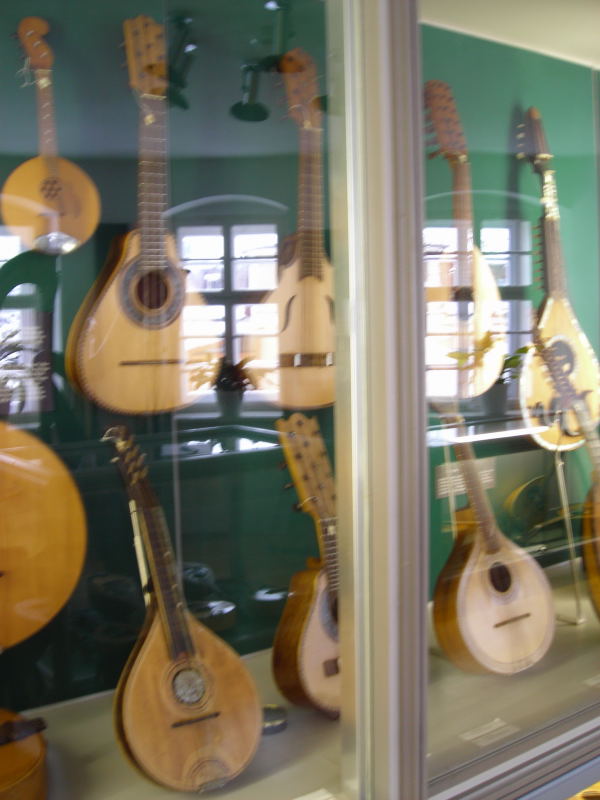 |
| Galeria no Musikinstrumenten Museum - Markneukirchen |
Está a ser desenvolvido um trabalho sobre a relação entre construtores e instrumentos de Portugal e Alemanha através da colaboração com a Universidade de Ciências Aplicadas de Zwickau e os Professores Eberhard Meinel e Andreas Michel. Os instrumentos portugueses existentes no Musikinstrumenten Museum em Markneukirchen, com o apoio da Directora Heidrun Eichler, estão a ser analisados, bem como os seus "primos" alemães, num estudo comparativo.
 |
| utilizando um FFT-Analyzer |
 |
| Prof. Dr. Eberhard Meinel |
APOIO
APOIO
Fundação para a Ciência e a Tecnologia//POPH do QREN e FSE (BPD)
sexta-feira, 3 de dezembro de 2010
Organologia no seu melhor
O "Institut für Musikinstrumentenbau" na Alemanha
A ANIMUSIC tem visitado diversas instituições europeias na preparação da próxima publicação, Panorama sobre a investigação e as colecções europeias e norte-americanas de instrumentos musicais (BPD da Fundação para a Ciência e a Tecnologia). A recepção tem sido extraordinária, tendo-se observado, para além dos espaços públicos, equipamento e instalações dos bastidores, em que se incluem as oficinas e as reservas (algumas em edifícios distanciados do museu principal, pelo que ainda mais agradecemos a disponibilidade que os técnicos nos têm oferecido, muitas vezes até fora do horário normal de funcionamento das instituições).
Por outro lado, estabelecem-se parcerias com entidades dedicadas à investigação organológica no sentido de se promover esta ciência em Portugal, sendo de destacar o Institut für Musikinstrumentenbau e nomeadamente os Engenheiros Dr. Gunter Ziegenhals e Holger Schiema. Funcionando num edifício amplo, possui numerosas salas adequadas a diferentes funções e equipamento especializado na análise e medições de instrumentos musicais. Note-se que a maioria dos aparelhos, e mesmo a câmara anecóica, foram concebidos e construídos no Instituto, onde existem também oficinas com máquinas próprias para os distintos materiais. Eis uma pequena selecção de imagens que poderão mostrar o tipo de trabalho que se executa na nossa área de investigação:


APOIO
Fundação para a Ciência e a Tecnologia//POPH do QREN e FSE (BPD)
quinta-feira, 7 de outubro de 2010
Novas "visualizações" em Barcelona
Congresso sobre Iconografia Musical
Aproveitámos o trabalho que efectuámos em Barcelona, relativo ao estudo das colecções existentes e de diferentes processos museológicos aplicados aos instrumentos musicais, para assistirmos ao congresso sobre iconografia musical (http://scmus.iec.cat/filial/ViewPage.action?siteNodeId=182&languageId=1&contentId=-1 ), que decorreu de 4 a 6 de Outubro de 2010, organizado por Jordi Ballester.
O programa pode ser consultado em:
http://scmus.iec.cat/filial/digitalAssets/9939_Tr__ptic_Congr__s_definitiu.pdf
 |
| Fotografia do Museu da Música em Barcelona. |
APOIO
Fundação para a Ciência e a Tecnologia//POPH do QREN e FSE (BPD)
quarta-feira, 22 de setembro de 2010
Diálogo em Viena
Estudo de acústica em rochas-tambor
A ANIMUSIC esteve presente no congresso Vienna Talk 2010 (http://viennatalk.mdw.ac.at/?page_id=1000&len=gb) em que foi apresentada a metodologia utilizada na investigação que desenvolvemos sobre a sonoridade hipoteticamente aproveitada de rochas pré-históricas com características identificativas. Esta introdução ao trabalho que realizamos sobre as rochas com cavidades foi publicado pela comissão do congresso e o texto, em inglês, pode ser consultado em: http://viennatalk.mdw.ac.at/upload/Pap_01_91_Bastos.pdf .
 |
| ...sons que se propagam pelos montes... |
APOIO
Fundação para a Ciência e a Tecnologia//POPH do QREN e FSE (BPD)
e
Fundação Calouste Gulbenkian
e
Fundação Calouste Gulbenkian
Subscrever:
Mensagens (Atom)